
ABA Programs for Skill Development & Behaviour Modification
Individual programmes supporting communication, attention, social skills, independence and behaviour regulation.
- Autism
- ADHD
- Behaviour
- Communication
- VB MAPP
- ABLLS R
- CARS 2
- ADOS 2
A service is what the centre provides. A condition is a reason someone may need support—so the two are kept clearly distinct.
Individual programmes supporting communication, attention, social skills, independence and behaviour regulation.
Support for language understanding and expression, speech clarity, fluency and functional or social communication.
Individual educational support for reading, writing, mathematics, attention, executive skills and school readiness.
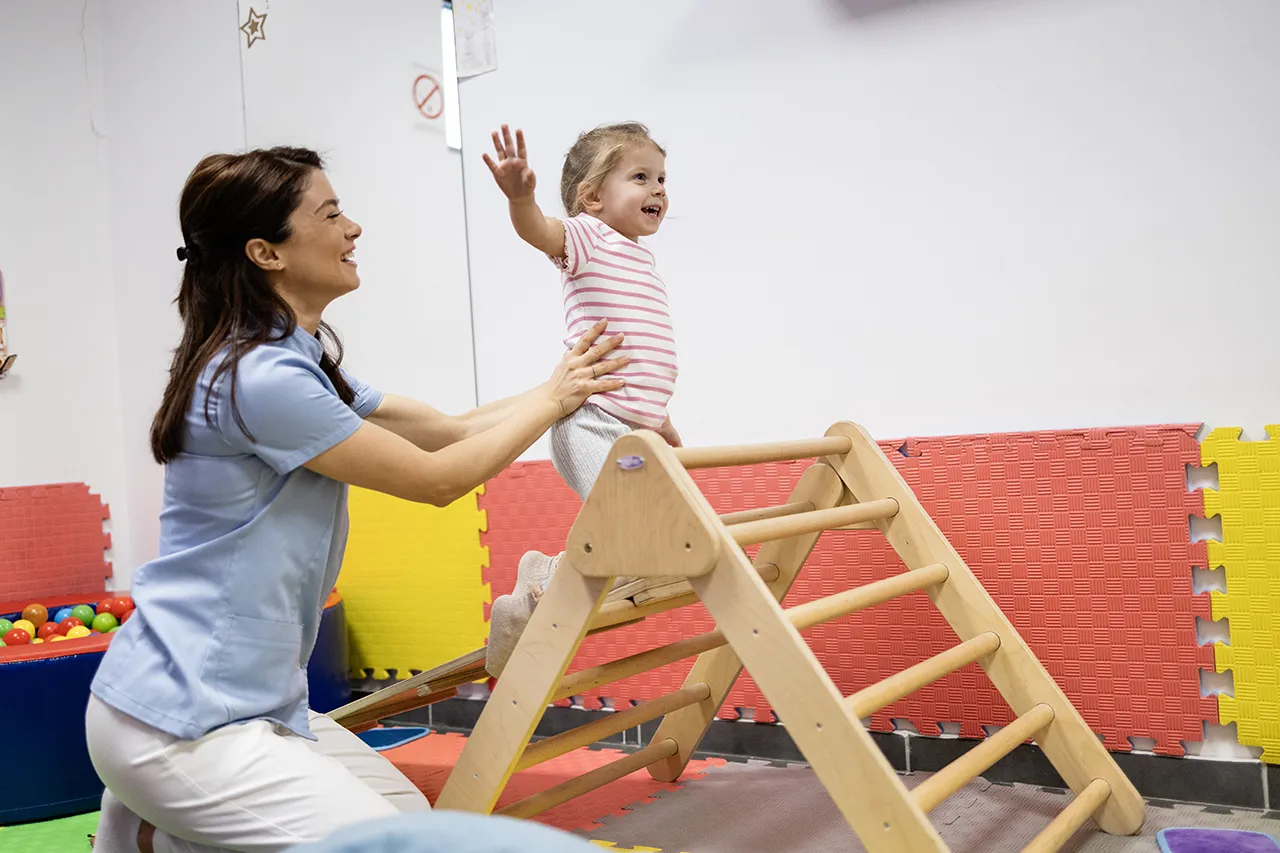
Support for communication, imitation, play, attention, social and cognitive development, and independence.
Support for functional, developmental and independence skills used in everyday routines at home and school.
Assessment and rehabilitation for hoarseness, fatigue and voice quality or pitch concerns after appropriate medical review.
Structured information helps families understand terminology and daily impact without using a picture or single sign to diagnose a child.
A developmental condition that may affect communication, social interaction, flexibility and patterns of interest in different ways.
A neurodevelopmental condition that may affect attention, activity level, impulse control and organisation.
Development that is slower than expected across more than one area such as communication, play, learning or daily skills.
A condition that may affect learning, problem-solving and adaptive daily skills, with individual needs for every person.
Syndromes such as Down syndrome may be associated with communication, learning and developmental needs, with different priorities for each child.
Tell us what you are noticing and the Parent Guide will help you explore relevant services—without diagnosing online.
Learning difficulties do not look the same for every child, so we do not begin with one plan for everyone. We identify where the child needs support first, then build clear goals that help them progress in the core academic skills.
Letter and sound recognition, fluency, comprehension and phonological awareness.
Handwriting, word formation, spelling, sentence building and written expression.
Number sense, core operations, understanding and problem solving.
Sustained attention, working memory, following directions and finishing a task.
Following routines, working independently and being ready for the classroom.
Educational goals built on the child’s current level, with clear progress review.
The assessment tool is chosen according to the child’s age, needs and the reason for assessment, and each specialist uses the tools that match their scope and qualifications.
Maps language, learning and verbal behaviour skills to set suitable goals.
Assesses a broad range of learning, language, academic and functional skills.
A structured observation tool for autism, used by an appropriately qualified specialist.
Supports rating of autism-related characteristics within appropriate professional use.
Follows developmental skills in early intervention and sets stage-appropriate goals.
Assesses functional, independence and daily living skills.
Programs are not extra services; they are structured ways to bring goals and family collaboration together.
A structured programme bringing communication, learning, behaviour and daily-skill goals into one individual plan.
Structured support after the school day, focused on individual priorities without publishing unconfirmed schedules.
Practical strategies helping families support communication, learning and behaviour within daily routines.
We begin by listeningWe focus on individual needs, measurable goals, family collaboration and specialist coordination within a plan that can be followed.
We listen to what you are noticing and what you want to understand.
We identify the appropriate consultation or assessment pathway.
We set practical goals and a clear role for the family.
We review outcomes and update the plan as progress develops.

A concise guide to observing communication, understanding, and expression without unnecessary alarm.
Read article
Hydration, rest, and how the voice is used can make a meaningful difference.
Read articleThese answers do not replace individual guidance, but they explain how the process works and what to expect.
Consider an assessment when words or sentences are clearly delayed, instructions are difficult to understand, speech is less clear than peers, or communication often causes frustration. Early assessment clarifies needs and does not automatically mean a disorder.
The specialist listens to your concerns and developmental or medical history, then uses age- and condition-appropriate activities and tools. Findings, recommendations, and next steps are explained clearly.
Frequency depends on assessment findings, level of need, age, and goals. The specialist recommends a schedule after assessment and reviews it regularly as progress is made.
Families are essential partners. We provide short strategies that fit daily routines because natural, repeated practice helps skills carry over beyond therapy.
Services and communication are available in Arabic and English. Tell us your preferred language when booking so we can arrange the right appointment.
Your feedback helps us improve our services and helps other families learn more about the experience at Al Hawas Center.
Book a consultation directly, or use the Parent Guide if you are not sure which service is relevant.